Kargador at Dawn
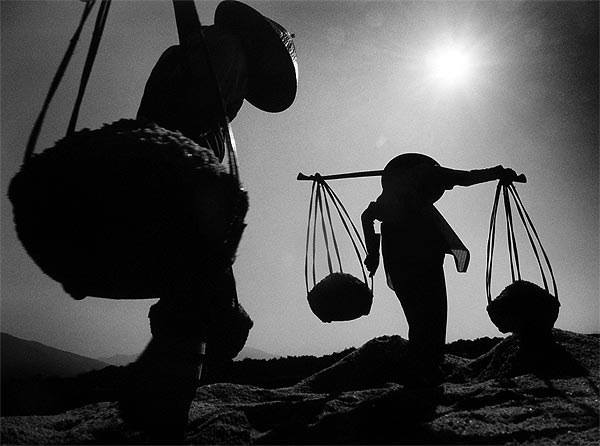
Work in the Vineyard
Thursday, May 06, 2021
Short Reflection for the 6th Sunday of Easter (B)
Readings: Acts 10: 25-26. 34-35. 44-48; 1 John 4: 7-10; John 15: 9-17
Selected Passage: “I no longer call you slaves, because a slave does not know what his master is doing. I have called you friends, because I have told you everything I have heard from my Father.” (John 15: 15)
Meditation: Among the many names given to the followers of Jesus, the title: “FRIENDS of Jesus” is, no doubt, the closest to the heart of discipleship. Jesus calls us friends, because he shares with us all he has from the Father
Yes. Have no fear, Jesus is our FRIEND and we are his…!
Visit www.badaliyya.blogspot.com
DHIKR SIMPLE METHOD...
Dhikr is an Arabic word for remembrance. In the “tariqa” (the way) movement, dhikr developed into a form of prayer… It is a prayer of the heart… following three simple steps:
1. Write in one’s heart a certain passage of the Holy Writ…
2. Make the same passage ever present in one’s lips.
3. Then wait for God’s disclosure on the meaning of the passage…that interprets one’s life NOW…!
It takes a week of remembering (dhikr)…or even more days to relish the beauty of this method…


Saturday, May 01, 2021
The Old Wineskin Keep Bursting...
The Old Wineskins Keep on Bursting…
Scattered thoughts on the pope's "attitude adjustment program", clericalism and the refusal to make necessary changes to Church structures.
By Robert Mickens | Vatican City
Pope Francis recently ordained nine new presbyters for the Diocese of Rome.And he told them not to think they're embarking on "an ecclesiastical career", as it was once said in the old days.
"This is not a 'career'," the pope warned them in Italian." It's a service... that has a style you must follow. The style of closeness, the style of compassion and the style of tenderness. This is the style of God -- closeness, compassion, tenderness."
Pope Francis repeated on this fine morning before the main altar in St. Peter's Basilica on the day that the Church marked "Good Shepherd Sunday". He then repeated the advice he's given out so many times before -- that priests and bishops must be like shepherds that walk "at times ahead of the flock, at times in the middle or behind... but, always there, with the people of God".
The 84-year-old pope did not fail to caution these young men against the allure of money or the temptation to treat the people in their care as if they were employees. He also told them not to be afraid of the challenges ahead, promising that all would be well if they remained close to God in prayer, to their bishop in humility, their fellow priests in unity and the "holy faithful people of God" from whom they "were elected".
The pope's fine words and the Church's brutal reality
These are lovely words. Unfortunately, they don't match the reality of how the ordained presbyterate is envisioned or actually exercised in many parts of the Church. And there is a simple reason for that.
The pope's language is contradicted (or, at least, attenuated) by the language used in the official Catholic teaching and legislation regarding the ordained priesthood -- and in the Church's very structures.
The Code of Canon Law speaks about commissioning men to the "sacred ministries", preferring the term "priest" (sacerdos) to that of presbyter. The difference in terminology is not unimportant. The connotations surrounding the word sacerdos have cultic overtones more connected to the Hebrew notion of one who offers sacrifices, whereas presbyter is the word the early Christian community used to describe those whom we today call ordained priests.
Only later, when it deals with parishes, does the code refer to the "sacred order of the presbyterate". But it still describes presbyteral ministry in the classic language "of teaching, sanctifying and ruling (docendi, sanctificandi et regendi) the people of God".
The language of power
The code points out that one becomes a "cleric" after ordination to the diaconate. And at that point he receives the "power of orders" (potestas ordinis) and "power of ecclesiastical governance" (potestas regiminis ecclesiastici).
The operative word here is potestas -- power. This is emphasized once more in the section on removing men from the clerical state. The code states clearly that they are "prohibited from exercising the power of orders".
The Code of Canon Law also underlines that only ordained presbyters have the "power" to absolve sins. "For the valid absolution of sins it is required that, besides the power received through sacred ordination, the minister possesses the faculty to exercise that power over the faithful to whom he imparts absolution" (Can. 966).
Exercising power over the faithful!
Good Lord! But this is exactly what the priest does in the confessional. And this is so commonly understood as such, that Pope Francis has to keep reminding priests that they must be merciful to penitents above all else. That's because the code puts the emphasis in the wrong place, saying the confessor "acts as judge as well as healer" and is "the minister of divine justice as well as of mercy" (Can. 978). Judge first, healer second.
The pope keeps insisting that it's the other way around. Or it should be. But that is not the official language or ethos of the Church.
Need for extensive change in language and structures
It is true that in 2009 Benedict XVI officially changed the wording in Canons 1008 and 1009 that deal with the sacrament of Holy Orders. Instead of emphasizing that bishops and presbyters "shepherd" the People of God, Can. 1008 now says they "serve" them. Eliminated is the reference to "teaching, sanctifying and ruling". But only in this specific canon. These words, and this concept, remain elsewhere.
A new clause in Can. 1009 (but mainly for other political/ecclesiological reasons linked to the debate over the status of deacons) that states: "Those who are constituted in the order of the episcopate or the presbyterate receive the mission and capacity to act in the person of Christ the Head, whereas deacons are empowered to serve the People of God in the ministries of the liturgy, the word and charity".
Nonetheless, the connotations of having power, being specially "elected", being administrators of the sacred... all remain. This is all part of a bigger ethos that permeates the entire Church. It is called clericalism. And it is something all Catholics are infected with to some degree or another. All of us. Whether we are conscious of it or not.
The limits of Pope Francis' "attitude adjustment program
"A big part of the problem rests with our seminaries, most of which set our future presbyters apart from the rest of the people of God from the outset, to prepare them for their so-called "service". Many places enforce a clerical dress code or allow these men who are not even clerics yet to begin dressing like clerics. Seminarians in dog collars and cassocks masquerading as "clerics" -- and not just through the streets of Rome. Most lay people probably think there is nothing wrong with, so much has the clericalist mentality permeated all levels of the Church these past centuries.
There is nothing that feeds clericalism in a more subtle, yet incisive way than the use of the titles. And it begins when a newly ordained 25-year-old priest is called "Father" by someone who is old enough to be his grandmother or great-grandfather. It's like the Mormons calling their teenage missionaries "elders".
Words matter and have a significance. And an apt word to describe both of the cases above is "weird". Until the structures and laws are changed, the use of terms like "service" and "servant-leadership" will remain mere slogans from an ecumenical council that has not yet been implemented.
The current pope has employed Vatican II language in a marvelous way in his "attitude adjustment program" aimed at changing the mentality or ethos of the Church. But changing the mentality is not enough. Right thinking alone cannot correct a bad system. Or put another way, you can't put new wine in old wineskins. This is exactly what well-intentioned Catholics -- including many good men who have been "commissioned to the sacred ministries" -- have been trying in these past five decades or more.
It should be clear to all that the wineskins keep bursting. And we have one hell of a mess on our hands. It's well past the time for new wineskins -- new and reformed structures. Not just regarding ministry, but in many other areas of the Church, as well. But it's still not clear whether Pope Francis has the courage to provide them. Or whether he still has time.
Read more at: https://international.la-croix.com/news/letter-from-rome/the-old-wineskins-keep-on-bursting/14214
Thursday, April 29, 2021
An Honorable Defeat
AN HONORABLE DEFEAT
After Jesus died in the most humiliating way a person could die at that time, by being crucified, the first generation of Christians had a massive struggle with both the fact that he died and particularly with the manner in which he died.
For them, if Jesus was the long-awaited Messiah, he wasn’t supposed to die at all. God is above death and certainly beyond being killed by humans. Moreover, as a creedal doctrine, they believed that death was the result of sin and, thus, if someone did not sin, he or she was not supposed to die. But Jesus had died.
Most faith-perplexing of all, was the humiliating manner of his death. Crucifixion was designed by the Romans not just as capital punishment but as a manner of death that totally and publicly humiliated the person’s body. Jesus died a most humiliating death. No one called Good Friday “good” during the first days and years following his death. However, given his resurrection, they intuited without explicitly understanding, that Jesus’ defeat in the crucifixion was the ultimate triumph and that the categories that make for victory and defeat were now forever different.
For several years after the resurrection, Christians were reluctant to mention the manner of Jesus’ death. It was a defeat in the eyes of the world, and they were at loss to explain it. So, they remained mostly silent about it.
St. Paul’s conversion and his subsequent insights changed this. As someone who was raised in the Jewish faith, Paul also struggled with explaining how a humiliating defeat in this world could be in fact a victory. However, after his conversion to Christianity he eventually understood how goodness could take on sin and even “become sin itself” for our sake.
That radically flipped our conceptions of defeat and victory. The cross was now seen as the ultimate victory and, instead of the humiliation of the cross being a source of shame, it now became the crown jewel: “I preach nothing but the cross of Christ.”
To read more click here or copy this link into your browser http://ronrolheiser.com/an-honorable-defeat/#.YIHGjalKgq0
www.facebook.com/ronrolheiser
Wednesday, April 28, 2021
5th Sunday of Easter
Short Reflection for the 5th Sunday of Easter (B)
Readings: Acts 9: 26- 31; 1 John 3: 18-24; John 15: 1-8
Selected Passage: “If you remain in me and my words remain in you, ask for whatever you want and it will be done for you” (John 15: 7)
Short Reflection: The challenge to each one of us is to remain steadfast in the faith both in good times as well as in bad times. The gospel tells us we need to connecte to Jesus in order to bear much fruit. The Father is the vine grower and we submit to his way of making us productive. www.badaliyya.blogspot.com
DHIKR SIMPLE METHOD...
Dhikr is an Arabic word for remembrance. In the “tariqa” (the way) movement, dhikr developed into a form of prayer… It is a prayer of the heart… following three simple steps:
1. Write in one’s heart a certain passage of the Holy Writ…
2. Make the same passage ever present in one’s lips.
3. Then wait for God’s disclosure on the meaning of the passage…that interprets one’s life NOW…!
It takes a week of remembering (dhikr)…or even more days to relish the beauty of this method…
Saturday, April 17, 2021
The Non-Violence of God
THE NON-VIOLENCE OF GOD
There are a number of texts which, on the surface, seem to indicate that God is ordering violence. But they are really archetypal and anthropomorphic in nature and do not justify that interpretation. If we read the bible from beginning to end, a progressive revelation (or at least a progressive realization on our part) of the non-violence of God ends in Jesus, who reveals a God of radical non-violence.
Here’s an example: In John’s Gospel, we see the story of the woman who has been caught in adultery. A crowd of pious persons bring her to Jesus and tell him that they have caught her in the very act of committing adultery and that Moses (their primary interpreter of God’s will) has ordered that, for this offense, she needs to be put to death. Jesus says nothing, instead he bends down and begins to write on the ground with his finger. Looking up, he tells them: “Let the person among you without sin cast the first stone!” Then he bends down and writes for a second time with his finger. Unbelievably, they get the message and lay down their stones and go away.
Jesus’ gesture of writing on the ground with his finger is significant. Who writes with his finger? Who writes twice? God does. And what God writes with his finger and writes twice are the Ten Commandments, and he had to write them twice because Moses “broke” them the first time.
Coming down the mountain, carrying the tablets, Moses caught the people in the very act of committing idolatry. Gripped in a fever of religious and moral fervor, Moses broke the tables of stone on the golden calf and on peoples’ heads. Moses was the first person to break the commandments and he broke them physically, thinking violence needed to be done for God’s cause.
Then, having broken them, Moses needed to go up the mountain a second time and have them rewritten by God; but before rewriting them, God gave Moses a stern message: Don’t stone people with the Commandments! Don’t do violence in my name!
Too often, in a variety of forms, we are still stoning people with the Commandments, falsely believing that God wants this violence.
To read more click here or copy this link into your browser
http://ronrolheiser.com/the-non-violence-of-god/#.YHSziRRKjDY
www.facebook.com/ronrolheiser
Wednesday, April 07, 2021
2nd Sunday of Easter (B)
Short Reflection for the 2nd Sunday of Easter (B): Divine Mercy Sunday
Readings: Acts 4:32-35; 1 John 5,1-6; John 20,19-31
Selected Passage: “Jesus said to him, "Have you come to believe because you have seen me? Blessed are those who have not seen and have believed." (John 20:29)
Meditation: Believing is not a question of seeing and touching. It is a question of TRUST! We believe in the testimony of the apostles and disciples – the companions of Jesus. They saw and believe that Jesus is truly RISEN from the dead.
This is the faith handed over by the apostles and disciples from one generation to another. It is the same faith handed by our parents from generation to generation. We do believe that the Resurrection of Jesus is the testimony that in the end, we, too, shall be victorious over sin and death. The Divine Mercy Sunday proclaims the RICHNESS and the BOUNDLESS MERCY of God!
www.badaliyya.blogspot.com
DHIKR SIMPLE METHOD...
Dhikr is an Arabic word for remembrance. In the “tariqa” (the way) movement, dhikr developed into a form of prayer… It is a prayer of the heart… following three simple steps:
1. Write in one’s heart a certain passage of the Holy Writ…
2. Make the same passage ever present in one’s lips.
3. Then wait for God’s disclosure on the meaning of the passage…that interprets one’s life NOW…!
It takes a week of remembering (dhikr)…or even more days to relish the beauty of this method…
Living beyond our Crucifixions
LIVING BEYOND OUR CRUCIFIXIONS
The Gospels tell us that, on the morning of the resurrection, the women followers of Jesus set out for the tomb of Jesus, carrying spices, intending to anoint and embalm a dead body.
What they find is not a dead body, but by an empty tomb and an angel challenging them with these words: “Why are you looking for the living among the dead? Go instead into Galilee and you will find him there!”
Go instead into Galilee. What a curious expression! What is Galilee? Why go back?
In the post-resurrection accounts in the gospels, Galilee is not simply a physical geography. It is, first of all, a place in the heart. Galilee is the dream, the road of discipleship that they had once walked with Jesus, and that place and time when their hearts had most burned with hope and enthusiasm. And now, just when they feel that this all is dead, that their faith is only fantasy, they are told to go back to the place where it all began: “Go back to Galilee. He will meet you there!”
And they do go back, to Galilee, to that special place in their hearts, to the dream, to their discipleship. Sure enough, Jesus appears to them there. He doesn’t appear exactly as they remember him, nor as often as they would like him to, but he does appear as more than a ghost or a mere idea. The Christ that appears to them after the resurrection no longer fits their original expectation, but he is physical enough to eat fish in the presence, real enough to be touched as a human being, and powerful enough to change their lives forever.
Ultimately that is what the resurrection challenges us to do, to go back to Galilee, to return to the dream, hope, and discipleship that had once inflamed us but that now is crucified.
One of the essential messages of Easter is this: Whenever we are discouraged in our faith, whenever our hopes seem to be crucified, we need to go back to Galilee and Jerusalem, that is, to the dream, to the road of discipleship that we had embarked upon before everything went wrong.
Christ always meets us on that road, explains the latest crucifixion to us, and sends us back – to Galilee and to our abandoned discipleship. Once there, it all makes sense again.
To read more click here or copy this link into your browser http://ronrolheiser.com/living-beyond-our-crucifixions/#.YGxvTWhMHDY
www.facebook.com/ronrolheiser
Saturday, April 03, 2021
The Cross as Revealing the True Cost of Love
THE CROSS AS REVEALING THE TRUE COST OF LOVE
Simply put, the cross says: “If you want real love beyond romantic daydreams, if you want to keep any commitment you have ever made in marriage, parenting, friendship, or religious vocation, you can do so only if you are willing to sweat blood and die to yourself at times. There is no other route. Love costs. What you see when you look at the cross of Jesus is what committed love asks of us.”
This is not something our culture is keen to hear. Today we have many strengths but sweating blood and dying to self in order to remain faithful within our commitments is not something at which we are very good. We find it very difficult to make choices and then to do the hard things that need to be done in order to stick with those choices.
Our problem is not ill-will or ill-intention. We want the right things, but every choice is a renunciation, and we would love to have what we have without excluding some other things.
We want to be saints, but we don’t want to miss out on any sensation that sinners experience. We want fidelity in our marriages, but we want to flirt with every attractive person who comes round; we want to be good parents, but we don’t want to make the sacrifice this demands, especially in terms of our careers; we want deep roots, but we don’t want to forego the intoxication that comes with new stimulus; we want stable friendship, but we don’t want duties or obligations that tie us down. In short, we want love, but not at the cost of “obedience unto death.”
And yet that is the message of the cross. Love costs, costs everything. To love beyond romantic daydreams means to “sweat blood” and “to be obedient unto death”. The cross invites us to look at the choices we made in love, see how they narrow our options, and, in that pain, say: “Not my will, but yours, be done.”
To read more click here or copy this link into your browser
HTTP://RONROLHEISER.COM/THE-CROSS-AS-REVEALING-THE-TRUE-COST-OF-LOVE/#.YFO8O2RKJDY
www.facebook.com/ronrolheiser
Thursday, April 01, 2021
Against Lying
Against Lying…
The Church should be a living witness to the truth.
By Rita Ferrone | United States
We're seeing an epidemic of lying in America. In fact, it's gotten so bad that I wish we would hear more preaching on the Eighth Commandment. You know, the one that tells us not to bear false witness against our neighbor.
The most alarming symptom of this epidemic is the spread of the "Big Lie" that Donald Trump won the 2020 presidential election—a lie he and his political allies continue to propagate. But more fundamentally his whole presidency legitimated and instrumentalized habitual lying as a political tool.
The more often lies are circulated, the more distrust grows. In the absence of truth, the door is thrown open to conspiracy theories and fantasy. The problem is not just Trump lawyers Rudy Giuliani and Sidney Powell pushing baseless claims on television, or MyPillow CEO Mike Lindell making deranged videos that purport to prove voter fraud.
It's also the sinking feeling that we have drifted into a disorienting "post-truth environment" where the difference between fact and fiction no longer matters. I admit that politics has always been rampant with temptations to spin the facts. But nowadays it has become easy to reach beyond garden-variety exaggeration or prevarication and go for outright lies. It's the Trump ethos.
The more brazen the untruth, the better. When politicians model themselves on Trump, they become impervious to facts. For example, the Washington Post recently reported on a whole string of blatant falsehoods that Madison Cawthorn (R-N.C.) employed during his campaign for Congress. He claimed that he was going to attend the Naval Academy when, in fact, his application had been rejected. He said that he was accepted by Harvard and Princeton; this too was untrue.
Did his friend really leave him for dead at the scene of his terrible accident? The friend and the medics who aided him deny it. Beyond flagrant misrepresentations of his own personal history, he also lied about others in order to advance his career. He won votes by using a manipulated video clip of his primary opponent that totally misrepresented her views, then traveled to the southern border of Texas and proclaimed that thousands of American children were being kidnapped by drug cartels and sold as sex slaves, "one of the greatest atrocities I can imagine. "Except that it never happened.
Why does moral opprobrium no longer attach to lying? Another newcomer to Congress who strives to emulate Trump, Lauren Boebert (R-Colo.), has likewise been called out for telling tall tales. Her oft-repeated account of why she began to carry a firearm is a prime example. A man was "beaten to death" in front of her restaurant, she says, and seeing him victimized so brutally made her feel the need to protect herself. Horrible, right? What really happened, however, was that the man died of a drug overdose in an alley several blocks away.
The story earned her three Pinocchios from the Washington Post, and was debunked by the fact-checking website Snopes. She remains unfazed and unrepentant. Why does moral opprobrium no longer attach to lying? Have we forgotten that bearing false witness is wrong? How could it be possible that Donald Trump lied to the public more than thirty thousand times while in office, yet suffered little or no loss of support from Christian churches—including many of our Catholic bishops and parishioners?
You could theorize that his supporters are cynical or gullible, but the fact remains that a serial liar was our president for four years and millions of Americans were prepared to vote for him again as though it didn't matter. Such gross mendacity in American public life ought to be cause for alarm. Our bishops and pastors should be losing sleep worrying that their flocks are falling prey to those who would exploit their credulity.
And what of the people who have accepted the view that it is fine to defame others if it serves "the cause"? It should bother us that conspiracy theories circulate with such reckless abandon and lives are being jeopardized by disinformation—whether about election fraud, climate change, face masks, or the COVID-19 vaccines. People can die because of lies.
Rarely have we seen the consequences of lying so vividly displayed in a single day as we did during the violent January 6 assault on the Capitol. Precisely because those who attended the rally-turned-insurrection believed the "Big Lie" that Trump's "landslide" victory was being viciously stolen, they stormed the seat of American democracy, terrorized elected officials and their staffs, killed a police officer, injured many others, and vandalized public property.
The Church needs to do something about this. A line from one of our Eucharistic Prayers speaks to me in this regard: "May your Church stand as a living witness to truth and freedom, to peace and justice." Is the Church really "a living witness to truth" in America? And if not, how can we make it so?
Rita Ferrone is the author of several books about liturgy, including Liturgy: Sacrosanctum Concilium (Paulist Press). She is a contributing writer to Commonweal.This article first appeared in Commonweal Magazine.
Read more at: https://international.la-croix.com/news/politics/against-lying/14060?utm_source=NewsLetter&utm_medium=Email&utm_campaign=20210401_mailjet
Monday, March 29, 2021
Easter Sunday
Short Reflection for Easter Sunday (B)
Readings: Acts 10: 34. 37-43; Colossians 3: 1-4; John 20:1-9
Selected Passage: "Then the otherdisciple, who reached the tomb first, also went in, and he saw and believed;for as yet they did not know the scripture, that he must rise from the dead.”(John 20: 8-9)
Meditation: Jesus is, truly, Risen.Alleluia! With Jesus' resurrection we now have the guarantee that, in the end,good shall prevail over evil; life over death; and grace over sin. Yes, if we have died with Jesus, we, too,shall rise with him.
Easter Blessings to one and all!
www.badaliyya.blogspot.com
DHIKR SIMPLE METHOD...
Dhikr is an Arabic word for remembrance. In the“tariqa” (the way) movement, dhikr developed into a form of prayer… It is aprayer of the heart… following three simple steps:
1. Write in one’s heart acertain passage of the Holy Writ…
2.Make the same passageever present in one’s lips.
3.Then wait for God’sdisclosure on the meaning of the passage…that interprets one’s life NOW…!
It takes a week of remembering (dhikr)…or even moredays to relish the beauty of this method…
Thursday, March 25, 2021
Palm Sunday (B)
Short Reflection for Palm Sunday of the Lord’s Passion (Mark)
Readings: Isaiah 50: 4-7; Philippians 2: 6-11; Mark 14: 1 - 15: 47
Selected Passage: “Those passing by reviled him, shaking their heads and saying: ‘Aha! You would destroy the temple and rebuild it in three days, save yourself by coming down from the cross’. Likewise, the chief priests, with the scribes, mocked him among themselves and said, ‘he saved others; he cannot save himself. Let the Christ, the King of Israel, come down now from the cross that we may see and believe’.” (Mark 15: 29-32)
Reflection: The crucified Christ is the powerful symbol of God’s love - ‘greater love than this no one has… to give one’s own life for his friends’. Jesus calls us his friends and we are ransomed from our sins by his blood. The ‘Suffering Servant of Yahweh’ embraced all sufferings unto death that all creation may have life and life to the full. Thus in our sufferings, sins, trials and difficulties, especially this time of Pandemic, we look at the one exalted in the Cross to receive life and healing. www.badaliyya.blogspot.com
DHIKR SIMPLE METHOD...
Dhikr is an Arabic word for remembrance. In the “tariqa” (the way) movement, dhikr developed into a form of prayer… It is a prayer of the heart… following three simple steps:
1. Write in one’s heart a certain passage of the Holy Writ…
2. Make the same passage ever present in one’s lips.
3. Then wait for God’s disclosure on the meaning of the passage…that interprets one’s life NOW…!
It takes a week of remembering (dhikr)…or even more days to relish the beauty of this method…
Subscribe to:
Posts (Atom)