Kargador at Dawn

Kargador at Dawn
Work in the Vineyard

Tuesday, October 15, 2013

Massignon's Mystical Vision of Muslim-Christian Relations

Massignon’s Mystical Vision of Christian – Muslim Relations

Better known in his native France than in this country, Louis Massignon was one of the most important scholars of Islam who ever lived. His influence on the study of Islam in the West was far-reaching, but Massignon was far more than an influential academic. His engagement with Islam was deeply personal and marked his life in profound and dramatic ways.

In a preface to a 1999 biography, Boutros Boutros-Ghali, the former secretary-general of the United Nations, paid tribute to Massignon's passionate engagement with the Other: "Louis Massignon invites us to enter into... the rediscovery of the original dialogue between cultures and religious. ... At a time when our world is prey to new waves of intolerance and new fundamentalisms ... we need to revive, in the hearts of men, this existential spirituality of Louis Massignon: dialogue, openness and tolerance."

A turning point in Massignon's life and the onset of his personal relationship with Islam began at the approach of dawn on May 3, 1908. While being held prisoner aboard a steamship on the Tigris River, accused of being a spy, Louis Massignon received a visit from a "Stranger without a Face" who took away everything he was and gave him everything he would become. Many years later, when he tried to describe this experience, Massignon stammered and resorted to metaphors. Massignon wrote that he saw himself as God, his judge, saw him at that moment--depraved and pretentious, worse than useless, undeserving of love or mercy or even of existence. He had abandoned the faith of his childhood; he was an active homosexual, a slave to his passions.

Massignon reported the execution of this judgment was suspended due to the prayers of five intercessors: Massignon's mother, the writer Juris Huysman who had prayed for Massignon on his deathbed, the Saharan hermit Charles de Foucauld, the tenth-century Sufi mystic al-Hallaj, and the Alousi family, pious Muslims who had given Massignon hospitality in Baghdad. It was thanks to these intercessors, both Christian and Muslim, that he was able to receive pardon. Massignon would later marvel that the prayer that spontaneously came to his lips after the mysterious visitation was in Arabic: "O God, O God, have mercy on me in my weakness!"

Louis Massignon was born on July 25, 1883, at Nogent-sur-Marne. His father was a sculptor who was well known in the French artistic community. Massignon was fascinated by Africa and the desert from his youth. His first trip to Algeria in 1901 confirmed his passion for this totally different world. By the age of 20 he had ceased to practice his Catholic faith and declared himself an agnostic. In 1904 he traveled to Morocco and began to seriously study both classical and dialectic Arab. In 1906 he was in Cairo. There he learned of the legends of al-Hallaj and met Luis de Cuadra, a Spanish nobleman, a convert to Islam, who became his lover and companion. The following year Massignon was sent by the French ministry of education to Baghdad for an archeological expedition into the Mesopotamian desert. It was during this mission that he was detained and accused of espionage and experienced his visitation from God.

While in Baghdad, Massignon had presented himself to the Alousi family of whom he had heard good reports. They didn't know him and had every reason to be suspicious of him. Yet they gave him hospitality, made him part of the family, shared everything with him and protected him as one of their own. After his capture, at great risk to themselves, the Alousi family rescued Massignon when the steamship he was on arrived in Baghdad. They made sure he received the medical attention he needed and helped him escape from Iraq.

When the "Stranger without a Face" presented himself to Massignon, it was like a reversal of his own role with the Alousis. The fact that he had been received as a faceless stranger enabled him to receive the divine visitation. Massignon never forgot that he owed his physical and moral salvation to the hospitality of this Muslim family. Through them and his other intercessors, Massignon encountered the God of Abraham, Isaac and Jacob, the Father, Son and Holy Spirit.

Hospitality, one of the sacred duties of Islam, became a leitmotif for him, a lens through which he saw the entirety of God's relationship with us and our relationship to one another. To receive the other such as he is, in his strangeness and mystery, to accept him and share with him and, at the same time, be received--in this consists the Law and the Prophets and the Fiat, the gracious acceptance of the Incarnate Word by the Virgin Mary.

Massignon's other Muslim intercessor was al-Hallaj. One of the reasons Massignon traveled to Baghdad was his decision to write his doctoral dissertation on this 10th-century mystic who suffered greatly from the divisions in Islam and dreamed of a unified Muslim community. Although his God was the transcendent God of Islam, al-Hallaj claimed an intimate, loving relationship with him. Because of this, Al-Hallaj was condemned as a heretic and crucified; his body was cremated and his ashes thrown into the Tigris River in the area in which Massignon received his visitation.

The rest of Massignon's life was an unfolding of his experience with the Stranger and was dedicated to repaying his debt to his Muslim intercessors. For the next 50 years he studied and made known the life and sayings of al-Hallaj. The quality of his relationship with the mystic/martyr is strikingly summarized in a text written in 1932: "It is not that the study of his [al-Hallaj's] life, full and strong, righteous and undivided, ascending and dedicated, has revealed to me the secret of his heart. It is rather al-Hallaj who has penetrated my heart and penetrates it still."

Massignon thought about the priesthood and about joining missionary priest Charles de Foucauld in the Sahara but finally opted for marriage. Mobilized as an officer in the First World War, he was first stationed in Macedonia, then sent to Syria and Palestine as an aide to the French high commissioner. When Jerusalem was liberated from the Ottoman Turks, Massignon entered the Holy City alongside Lawrence of Arabia. He suffered bitterly when the Allies later broke their promises to the Arab insurgents. After the war he was named professor at the College de France where he taught until 1954. He went to Egypt regularly to give classes, in Arabic, at the University of Cairo. In 1929 he founded the Institute for Islamic Studies in Paris and that same year began giving French lessons in the evenings to illiterate North African immigrants--a work he carried on for several decades.

In 1941 he founded the Institute Dar-es-Salaam in Cairo to promote Arab-Christian studies. At one time president of the Friends of Gandhi, during the struggle for Algerian independence Massignon regularly visited North Africans detained in French prisons. He was arrested several times for participating in nonviolent demonstrations against French brutality toward Arabs both in France and Algeria, and he was physically assaulted by right-wing students for being an "Arab-lover." 

In 1950, Massignon was ordained a priest in the Greek Melkite rite, which allows for married clergy. He died of a heart attack Oct. 31, 1962.

Louis Massignon was a complex and conflictive personality. His erudition was legendary and often overwhelming. He was a tireless talker, literally bursting with ideas and intuitions, constantly jumping from one theme to another with a logic known only to himself. Yet he possessed a basic simplicity. He based his life on a sacred promise he had made to pray for his Muslim brethren and offer his life for them as they had prayed and risked their lives for him. Everything, from his vast intellectual-powers to the most humble gestures of solidarity and friendship, was at their service. There was an absolute, uncompromising, almost frightening fidelity and commitment. This loyalty extended to all his friendships. He would solemnly offer himself as a victim for the salvation of Luis de Cuadra, his former partner.

Not only did Massignon immerse himself in Arab literature, philosophy and mysticism; he learned to think as a Semite, reason as a Semite and express himself as a Semite. To read Massignon is to enter into another world where all is symbolic, where words point beyond themselves to mysteries that cannot be possessed. He approached Islam from the point of view of Islam itself and saw its values as they are interiorized by the community, as a pious and sincere Muslim would wish to live them. He sees the other as the other wants to see himself. This is the dialogue of hospitality, the reception of the other not on one's own terms but on his.

Massignon was not naive. He was well aware of the pettiness of the Muslim legalists, the intolerance of the fanatics, the avarice and ambition of the unscrupulous, yet he loved what was pure and noble in Islam. And it was this image of what was best in their faith that he presented both to the Arabs and to the Western world. (Would Christians not wish that our church be judged on what it aspires to be rather than on the tarnished witness we give?) Massignon's approach to Islam is not apologetic in any sense of the word nor is there any hint of proselytism. He desired, of course, that his friends arrive at the plentitude of truth but was convinced that what was positive and pure in Islam was a vehicle of grace that did, in fact, lead to the fullness of truth, even if it was not articulated.

Massignon, however, did not seem tempted by Islam as were many of his contemporaries who contrasted the sense of the sacred and the all-penetrating religious reference of the Muslim community with the secular indifference and spiritual apathy of Western culture. The God of Islam is unique and transcendent and the human race was created to witness to this inaccessible oneness. The God Massignon experienced and for whom he lived was the lover of man, the guest of the Virgin, who entered our lives that we might enter his. 

Massignon never pretended to be a theologian; his piety was very simple, almost childlike. In his life-long dialogue with Islam, he was very clear about where he stood; there was gratitude, respect and genuine love, but there was no accommodating the truth or glossing over irreducible differences on a confessional level. The ultimate and essential dialogue, however, was in the silent purity of the mystical experience, in the communion of the saints where the merciful are shown mercy beyond time and space.

Louis Massignon opened a whole new dimension to Christian-Muslim relations. Cardinal Giovanni Battista Montini, the future Pope Paul VI, was an enthusiastic admirer of his work as were Jacques and Raissa Maritain. The very positive assessment of Islam in the decree on ecumenism of Vatican II was due in great part to the influence of Massignon. For Islamic scholar John Voll of Georgetown University, the enduring legacy of Massignon was to reveal, both to the Western world and the Muslim world, the mystical dimensions latent in Islam.

But Massignon was not always understood by his contemporaries. His patriotism was seriously questioned during the Algerian revolution. His attitude towards the state of Israel alienated many of his closest friends. He did not deny the right of the Jewish people to a homeland but opposed the violence with which they expelled and humiliated the Arab populations to erect what he saw as a secular and materialistic state.

Reactions to Massignon in the Islamic communities were varied. He had many authentic and long-lasting friendships with numerous Muslim scholars. Those most receptive to him were the social radicals who wanted to modernize Islam and who were led by Massignon to rediscover the essential religious and mystical elements of their faith. One wonders what the Middle East would be today had Massignon's disciple, Ali Shari, prevailed in Iran rather than the Ayatollah Khomeini (Shari was assassinated in Paris prior to the overthrow of the shah). Just as numerous, however, were those who felt uncomfortable about a Christian expounding on their religion. Moreover, it was practically unimaginable in certain more traditional circles that a Christian who knew Islam as profoundly as did Massignon would not convert to Islam if he were in good faith. He was thus suspected of ulterior motives. After centuries of polemic and warfare between Christianity and Islam, it was difficult to believe in the absolute gratuity of Massignon's interest and sympathy.

There are many truths lived and preached by Massignon that are relevant to the "clash of civilizations" we are witnessing today. There can be no peace and confraternity without dialogue, and there can be no dialogue without respect for the other such as he is. This implies a basic humility, a capacity for hospitality where one is emptied and enriched. This is the opposite of what is happening around us. But prophets are sent in times of crisis, and Massignon's dedication to empathetic understanding of the other sets a standard for us to follow today.


(by Jerry Ryan is a freelance writer and a longtime worker at the New England Aquarium. Published in National Catholic Reporter Dec. 17, 2004)

Prophecy - Challenge and Comfort

PROPHECY - CHALLENGE AND COMFORT

Working for a summer in one of our Oblate parishes, I was living in the rectory with an elderly priest, a fine, saintly man. He had been ordained for more than 50 years and had, during all those years, been exemplary, honest, faithful, and generous. He was deeply respected. I was taken by his goodness.
One evening, I asked him: "Father, if you had your life as a priest to live over again, would you do anything different?" I was expecting him to say no, given his obvious goodness and fidelity. His answer surprised me.
"If I had my priesthood to live over again," he said, "I would be a gentler with people the next time. I would console more and challenge more carefully.
I was one of those people who was taught and who deeply believed that only the full truth can set us free, that we owe it to people to challenge them with the truth, in season and out. I believed that and did it for most of the years of my ministry. And I was a good priest, I lived for others and never once betrayed in any real way my vows and my commitment.
But now that I am older, I regret some of what I did. I regret that sometimes I was too hard on people! I meant it well, I was sincere, but I think that sometimes I ended up laying added burdens on people when they were already carrying enough pain. If I were just beginning as a priest, I would be more gentle, I would spend my energies more trying to lift pain from people. People are in a lot of pain. They need us, first of all, to help them with that!"
What the world needs first of all from us, the churches, is comfort, help in lifting and understanding its complexity, its wounds, its anxieties, its raging restlessness, its temptations, and its infidelities and its sin. Like the prodigal son, the world needs first of all to be surprised by unconditional love. Sometime later, and there will be time for that, it will want hard challenge.
(Fr. Ron Rolheiser, OMI)

Sunday, October 06, 2013

Badaliyya Tradition

The Badaliyya Tradition…
By Dorothy C. Buck

In 1934 a renowned French Catholic Islamic scholar and an Egyptian Christian woman also prayed together before the altar of a Franciscan Church in Damietta, Egypt. In a passionate plea to the God of Abraham, father of Jews, Christians, and Muslims, they made a vow to dedicate their lives to pray for the Muslim people, to stand before God for them.

As a young man, Louis Massignon had lost interest in his Christian heritage. After an unusual conversion experience while on an archeological mission in Baghdad he became a devout Roman Catholic believer. Through years of research in the Arab world he came to love his Muslim friends and colleagues.

Mary Kahil was a Melkite Christian who grew up in Cairo, Egypt where she became active in the Muslim women's political and social causes.

Louis discovered the roots of his spirituality and his faith life in his belief that to be a follower of Christ we must substitute our own lives for the salvation of others as Jesus did.

Thus the vow that Louis and Mary made in Damietta on February 9th, 1934 was grounded in a deep conviction of the heart, a call to what Louis named the Badaliyya, an Arabic word meaning substitution.

In 1947 Louis Massignon and Mary Kahil received official approval from Rome for the statutes of the Badaliyya. They attracted many members in Cairo as well as those joining in solidarity with them, like Cardinal Montini, the future Pope Paul Vl, and many others in monasteries and church communities around the world.

In the statutes they agreed to pray for the Muslims, to treat them with respect, affection and kindness, and to personally live the gospel message of love in their daily lives. Like Mary they devoted themselves to the Muslim community by volunteering in organizations where they could live out the spirit intended by the Badaliyya.

They met once a week for an hour. Guided by his relationship with Charles de Foucauld, Massignon invited them to begin their gatherings with a prayer in solitude before the altar called adoration. Then they read the spiritual writings of Foucauld or others, and ended by praying together.

Louis Massignon's understanding of what he called mystical substitution traced back to earlier church traditions. The many saints who were often martyrs for their faith were said to unite their sufferings and death with the passion and death of Christ.  In the medieval church some extraordinary mystics felt called to pray to take onto themselves the physical and emotional afflictions of those who came to them for healing.

These examples seem far from our contemporary experience of faith and appear exaggerated and foreign. Yet, Louis Massignon's vision of such immense love of
God, even at the expense of one's own life or health, evolved into a profound and intense spirituality of compassion for others.

In a letter written on January 16, 1955 to Mary Kahil he described the spirit of the
Badaliyya: (All Massignon references are from L'Hospitalité Sacrée, Ed. Jacques Keryell, 1987. Author's translation.)

"...They say that the Badaliyya is an illusion because we cannot put ourselves in the place of another, and that it is a lover's dream. It is necessary to respond that this is not a dream but rather a suffering that one receives without choosing it, and through which we conceive grace. It is the visitation [by the spirit of God], hidden in the depth of the anguish of compassion, which seizes us as an entrance into the reign of God. It certainly appears powerless, yet it requires everything, and the One on the cross who shares it with us transfigures it on the last day. It is suffering the pains of humanity together with those who have no other pitiful companion than us."


Friday, September 27, 2013

The Newness of the Christian Message

The Newness in Christ’s Message…

"You have heard that it was said, 'An eye for an eye and a tooth for a tooth.' But I say to you, offer no resistance to one who is evil. When someone strikes you on (your) right cheek, turn the other one to him as well. If anyone wants to go to law with you over your tunic, hand him your cloak as well. Should anyone press you into service for one mile, go with him for two miles. Give to the one who asks of you, and do not turn your back on one who wants to borrow. (Matthew 5: 38-42)

·       No resistance to one who is evil…
·       Turning the other cheek…
·       Handing over your cloak, as well…
·       Going the extra mile…
·       Not turning of one’s back from the needy…

Are these the values we live by…?


Monday, September 23, 2013

The Jesus Code - Unraveling the Secret

THE JESUS CODE – UNRAVELING THE SECRET

There is no level of reality where one doesn't see the relentless deep pull inside of all things towards a unity, community, fusion, and oneness beyond self. Love stirs all things, speaking to every element in the language it can understand. Deep inside of us, we know too that this alone can bring us home.
And there is an inner code, a certain DNA, within love itself. It too has inner secrets, an inner structure, and a code that needs to be cracked if we are to properly understand its dynamics. And we don't crack that code all at once, at a weekend retreat or at religious rally. We crack it slowly, painfully, with many setbacks, over the course of a lifetime.
Jesus gave us the keys to crack it. They can be named: vulnerability, the refusal out of love to protect ourselves, self-sacrifice, putting others before ourselves, refusing to give back in kind when someone hurts us, a willingness to die for others, the refusal to give ourselves over to cynicism and bitterness when things beset us, continued trust in God and goodness even when things look the opposite, and especially forgiveness, having our hearts remain warm and hospitable, even when we have just cause for hatred.
These are the keys to the wisdom that Jesus revealed and the gospels tell that we are "inside" or "outside" the true circle of love, depending upon whether or not we grasp this wisdom.
(Fr. Ron Rolheiser, OMI)
To read more click here
Or copy this address into your browser

Friday, August 23, 2013

Badaliyya 102


BADALIYYA 102
Dear Friends of the Badaliyya,

The Badaliyya Prayer Group began in Cairo in 1934 under the guiding spirit of Fr.  Louis Massignon and Mary Kahil. The Badaliya Movement is closely linked to a Marian spirituality which seemed in keeping with Massignon's spirituality as well as that of his friend and mentor, Charles de Foucauld.

We began the movement in Cotabato out of a shared concern for the mounting religious undertones in the conflicts in the Southern Philippines , especially in the Cotabato empire province. 

By renewing the spirit of the Badaliyya for our time we are hoping to encourage mutual respect, understanding and dialogue between Massignon's three Abrahamic traditions here in the Southern Philippines and wherever others join us in spirit around the world. In the spirit of our friend and guide, Louis Massignon we believe, as he did, that any efforts at reconciliation and social action must begin in prayer.

We begin by reflecting on the foundations of the Badaliyya in order to ground us in the spirit of its original intention. The Badaliyya began with a vow made by Louis Massignon and Mary Kahil in an ancient Franciscan church to dedicate themselves to the well-being of the Muslim community.

Since we are a small group it is reassuring to realize that the Badaliyya began with only two. The initial responses to the idea of a vow led us to begin to realize the seriousness of our endeavor. It reminds us that all our vows are essentially a deepening of our baptismal promises. This is an invitation for us to struggle more intently with what we are called to become. 

We discussed the meaning of the Arabic word, badaliyya, substitution, and began some reflection on Massignon's understanding in light of his intense Christian faith. Substitution is a controversial and challenging call which we will continue to explore through the writings of Massignon and others at our gatherings.

In keeping with the original statutes of the Badaliyya we began our prayer together in silence. We used a piece of music to help us focus our prayer, and then spent some time in silent reflection. We centered our gathering on the theme of peace and each person was asked to bring a reading or something to share.

There were scripture passages, a reading from the Qur'an, and an original poem written about Saint Francis. Our intercessory prayers included a plea for peaceful resolution to the crises in the world and for conversion of hearts of all those whose hatred leads them to terrorist actions. We prayed for the courage to forgive them by offering ourselves in their place to be reconciled to a benevolent God. We closed with the prayer of our Church, the Lord's Prayer.

We agreed to join praying for peace in the world, especially in Mindanao, each last Thursday of the month here at IAG Office. 


Today there are members in 52 countries. The Union was officially recognized by a Bishop of the Catholic Church as an association of the faithful at Christmas in 1986 continuing the recognition given to Foucauld in 1909 by Mgr. Bonnet, the Bishop of Viviers in France.The Cairo Badaliya always included spiritual readings by Charles de Foucauld or others which we will include in our prayer as well.

Peace to everyone.
Jun Mercado, OMI

Cotabato City

Thursday, August 22, 2013

With the leadership of the Coptic Church from Ethiopia...

The Alliance of Civilizations...

Lecture on Nostra Aetate at 50


At Ashram in North India - Visiting Hindu Monastery...

Badaliyya 101


BADALIYYA 101

The Badaliyya movement was created in Cairo in 1934 by Fr. Louis Massignon. The same spirit was shared by his friend and mentor, Charles de Foucauld. 

The backdrop of the movement was the shared concern for the mounting religious conflicts in the Middle East, especially in Palestine/Israel. 

By renewing the spirit of the Badaliyya in the Philippines, we hope to encourage mutual respect, understanding and dialogue between Massignon's three religious  traditions here in the Philippines with few modifications.  We can substitute Indigenous Peoples’ beliefs to Judaism.  

The Badaliyya began with a vow made by Louis Massignon and Mary Kahil in an ancient Franciscan church to dedicate themselves to the well-being of the Muslim community. 

Since we are a small group it is reassuring to realize that the Badaliyya began with only two. The initial responses to the idea of a vow led us to begin to realize the seriousness of our endeavor.
The vows are essentially a deepening of our baptismal promises. This is an invitation for us to struggle more intently with what we are called to become. We discuss the meaning of the Arabic word, badaliyya, substitution, and begin some reflection on Massignon's understanding in light of his intense Christian faith. 

Substitution is a controversial and challenging call which we will continue to explore through the writings of Massignon and others at our badaliyya prayer session.

In keeping with the original spirit of the Badaliyya we shall have moments before the Blessed  Sacrament in silence in our own time... We do the adoration privately in silence with intercessory prayers that include a plea for peaceful resolution to the unpeace in Southern Philippines and for conversion of hearts of all those whose hatred leads them to terrorist actions. 


We pray for the courage to forgive them by offering ourselves in their place to be reconciled to a benevolent God. We closed with the prayer of our Church, the Lord's Prayer.

We center our gathering on the theme of peace and each person shares his/her experience on the issue of Muslim-Christian relations.  In solidarity with all the badals worldwide, we agree to join them in praying for peace in the world, especially in the Holy Land.

Peace to everyone.
Fr. Jun Mercado, OMI


Thursday, July 11, 2013

15th Sunday in Ordinary Time (C): Who is my neighbor?


Loving Means Acting Like the Good Samaritan

Share  
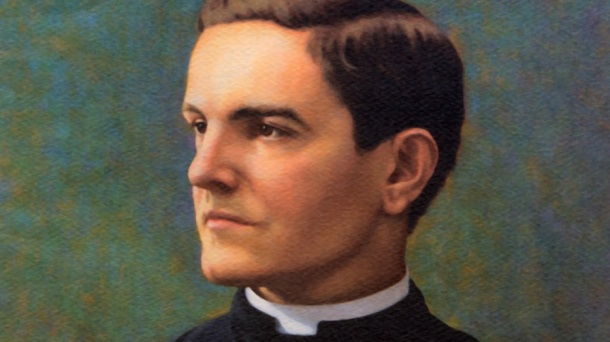
McGivney cropped
The Fifteenth Sunday in Ordinary Time, Year C – July 14, 2013
The story of the Good Samaritan in today’s Gospel (Luke 10:25-37) is one of the most treasured parables of the Bible. During my studies in the Holy Land, no matter how many times I traveled that perilous yet spectacular highway from Jerusalem to Jericho, I always found myself musing on Luke’s provocative story.

Luke’s story is powerful, for it speaks of the power of love that transcends all creeds and cultures and “creates” a neighbor out of a complete stranger. The parable is personal, for it describes with profound simplicity the birth of a human relationship that has a personal, physical touch, transcending social and cultural taboos, as one person binds the wounds of another. The parable is a pastoral one, for it is filled with the mystery of care and concern that is at the heart of what is best in human beings. The story is primarily practical, for it urges us to cross all barriers of culture and community and to go and do likewise!

Let us look closely at Luke’s parable. The legal expert who responds to Jesus’ counter-question is certainly a good and upright man. The words, “wished to justify himself” may often be understood to mean that the lawyer was looking for some loophole to demonstrate his worthiness. In fact, the lawyer wishes to be sure that he understands just what “love your neighbor” really implies. In response to a question from this Jewish legal expert about inheriting eternal life, Jesus illustrates the superiority of love over legalism through the parable.
The priest and Levite (vv 31-32) are religious representatives of Judaism who would have been expected to be models of “neighbor” to the victim they would pass by on the road. Levites were expected to have a special dedication to the law. The identity of the “neighbor” requested by the legal expert turns out to be a Samaritan, the enemy of the Jew. Samaritans were hated by the lawyer’s racial group. In the end, the lawyer is even unable to say that it was the Samaritan who showed compassion. He resorts to the description, “The one who treated him with compassion.”

Spectator sport
To show compassion is to suffer with the wounded and the suffering, to share their pain and agony. Compassion does not leave us indifferent or insensitive to another’s pain but calls for solidarity with the suffering. This is how Jesus, the Good Samaritan par excellence, showed compassion. At times we can be like the priest and the scribe who, on seeing the wounded man, passed by on the other side. We can be silent spectators afraid to involve ourselves and dirty our hands.

Compassion demands that we get out of ourselves as we reach out to others in need. It means that we get our hands and even our reputations dirty. Indifference is worse than hostility. The hostile person at least acknowledges the presence of the other while reacting violently to it; the indifferent person, on the other hand, ignores the other and treats him as if he did not exist. That was the kind of indifference and insensitivity shown by the priest and the Levite who passed by on the other side, leaving the wounded and waylaid traveler completely alone.

The Good Samaritan shows us what compassion and commitment are all about. He could have easily passed by on the other side. He could have closed his heart and refused to respond to a genuine need. But he stopped and knelt down beside the stranger who was hurting. At that moment, a neighbor was born. Everyone who stops beside the suffering of another person, whatever form it may take, is a Good Samaritan. This stopping and stooping, this pausing and kneeling down beside the suffering, is not done out of curiosity but out of love. The Samaritan’s compassion brings him to perform a whole series of actions. First he bandaged his wounds, then he took the wounded man to an inn to care for him, and before leaving, he gives the innkeeper the necessary money to take care of him (vv 34-35).

Loving means acting like the Good Samaritan. We know that Jesus himself is the Good Samaritan par excellence; although he was God, he did not hesitate to humble himself to the point of becoming a man and giving his life for us. More than 2,000 years after this story was first told, it continues to move people deeply. It teaches us what authentic compassion, commitment and communion with others are all about.

Concept of neighbour
In his 2005 encyclical letter “Deus Caritas Est” (On Christian Love), Benedict XVI wrote in #15:
The parable of the Good Samaritan offers two particularly important clarifications. Until that time, the concept of ‘neighbour’ was understood as referring essentially to one’s countrymen and to foreigners who had settled in the land of Israel; in other words, to the closely-knit community of a single country or people. This limit is now abolished. Anyone who needs me, and whom I can help, is my neighbour. The concept of ‘neighbour’ is now universalized, yet it remains concrete. Despite being extended to all mankind, it is not reduced to a generic, abstract and undemanding expression of love, but calls for my own practical commitment here and now.
“The Church has the duty to interpret ever anew this relationship between near and far with regard to the actual daily life of her members. Lastly, we should especially mention the great parable of the Last Judgment (cf. Matthew 25:31-46), in which love becomes the criterion for the definitive decision about a human life’s worth or lack thereof. Jesus identifies himself with those in need, with the hungry, the thirsty, the stranger, the naked, the sick and those in prison. “As you did it to one of the least of these my brethren, you did it to me” (Matthew 25:40). Love of God and love of neighbor have become one: In the least of the brethren we find Jesus himself, and in Jesus we find God.

A good knight
When I reflect on the ways that this parable has taken on flesh in history, I cannot help but think of the Venerable Servant of God, Father Michael McGivney, a parish priest who lived in 19th century America. He ministered to his flock with Christ-like compassion. Father McGivney recognized the material and spiritual poverty of so many members of the Catholic community of his day, and he understood that it was part of the lay vocation to become actively involved in offering assistance to brothers and sisters in need. He knew that it is not only priests and religious who have a vocation, but that every Christian is called by Christ to carry out a particular mission in the Church. He left a lasting legacy in founding and establishing the Knights of Columbus, a lay Catholic fraternal organization, that now has close to 1.8 million members worldwide (www.kofc.org). On Aug. 14, 1890, Father McGivney, a priest of the Diocese of Hartford (USA) died at the young age of 38 years old.

The Knights of Columbus are nothing more than the continuation of the parable of the Good Samaritan in history. This fraternal order specializes in preparing other Good Samaritans for our time. Like the Good Samaritan, Christ’s care for the sick and the suffering was an inspiration to Father McGivney who, as a priest, sought to be a living sign of Christ for the people he served.

Father McGivney and his brother Knights throughout history have been binding the wounds of those they discovered lying by the wayside of history and helping restore them to health and strength. In so doing, they imitate Christ, who came that we might have life in abundance.

“Nowhere is the face of our Church more attractive than in our open embrace of our neighbor,” Supreme Knight Carl Anderson recently wrote. “Each encounter with those in need is actually an opportunity to create a civilization of love, one person, one act at a time.”

Prayer for canonization
Many readers of this weekly column live in parts of the world where Knights are not present. Yet to simply know of their existence in the Church and in the world is cause for rejoicing and thanksgiving. They give flesh and blood to today’s wonderful Gospel story. I encourage you to pray to Father McGivney and ask him to help you become a Good Samaritan to those around you. Pray for the courage to reach out beyond boundaries, the boldness to get your hands dirty as you touch the outcast, and the grace and consolation to recognize the face of Jesus in those to whom you minister.

“God, our Father, protector of the poor and defender of the widow and orphan, you called your priest, Father Michael J. McGivney, to be an apostle of Christian family life and to lead the young to the generous service of their neighbor.
“Through the example of his life and virtue may we follow your Son, Jesus Christ, more closely, fulfilling his commandment of charity and building up his Body, which is the Church. Let the inspiration of your servant prompt us to greater confidence in your love so that we may continue his work of caring for the needy and the outcast.

“We humbly ask that you glorify your servant Father Michael J. McGivney on earth according to the design of your holy will.
“Through his intercession, grant the favor I now present (here make your request).
“Through Christ our Lord. Amen.”
[The readings for 15th Sunday of Ordinary Time are Deuteronomy 30:10-14; Psalm 69; Colossians 1:15-20; Luke 10:25-37.]