Kargador at Dawn

Kargador at Dawn
Work in the Vineyard

Monday, June 03, 2013

Letting God be GOD..!


Badaliyya Lesson 1: Let God be God

In the beginning God created the heavens and the earth… “Let there be… and there was…” He is the beginning… to him belongs the initiative … and the “wantedness” begins in him.

Experience the Divine Hospitality...  
  1. God is a constant RSVP…  
  2. He is the Host … 
  3. The Rahman and the Rahim … Mercy and Compassion.

 The hospitality of Abraham is the sign among the nations – the gathering of all peoples … announcing in the end that God is constant and insistent RSVP.

God is an invitation to mastery of oneself, discipline, delight, celebration and entrustment.

Wa ma qadaru-l-llahi hatta drihi” (They did not have the true estimation of God) S6:91.

Who God is to me…?

·      Joy:  God is a King and Miracle worker with all his splendor and majesty.
·      Sad:  God is a friend and consoler.
·      Confused:  God is a Guide and the Truth.
·      Tempted:  God is a hound.  I cannot hide from him.
·      Wronged:  God is a judge – just and forgiving.
·      Usual:  God is the creator and Father.
·      Poor:  God is a Provider and Generous Giver.
·      Reader:  God is the Lord of the universe.

To me… Who God is…?
  • The God I address in times of need.  I pray to him.  He is a friend and always present in me…
  • He is the God who cares.
  • God is everything.
  • God is a loving and living one – Father and Friend.
  • He I my Guide…
  • Without him, I’m nothing…
  • He is my protection and comfort.
  • The Bounty…
  • My sunrise and sunset…

 Our Responses…
  1. Obedience to his will…
  2. Confession of Sin…
  3. Declare that he is the greatest…
  4. Sing his praise in thanksgiving…

In Islamic Sufi Tradition…
  • God is Supreme and unseen…
  • One and only one God…
  • No partners…
  • All praise due to him…
  • Humble myself before him
  • Bow to him in adoration…
  • Most Merciful and Beneficent…
  • We forget him when we have all… and we remember him when we have none.
  • Author and Inventor of creation…
  • Tolerant God …
  • Lord of all…
  • Master… I’m his servant.
  • Beyond … yet closer to me than the jugular vein…
  • My seeing, walking, my everything…
  • His absence will reduce me to nothing…
  • From him I came to him I shall return…
  • One in his essence and attribute…
  • He begets not nor begotten…
  • None like unto him…

 LET GOD BE GOD!


Wednesday, May 29, 2013

Challenge at 65....


The Challenge that I face at 65 years old…
The challenge to me today is to learn and to understand the many changes in the universe and with that understanding be able to mentor a new generation, whose attitudes and cultural outlook may be different from mine – so that they understand too. 
I need to show trust, mutual respect, and tolerance, if I am to find the common ground between my generation and the new one and work together to find solutions to the many and varied issues that continue to confront us.  We can no longer afford to stand apart from a common effort to solve our common problems of “unpeace” and lack/little development.
Each of us needs to understand the importance of peace, reconciliation, development, and of reflection.  There is the necessity to open our minds and unlock our hearts to each other.   The Arabic word for this is “TADABBAR”!
Jun Mercado, OMI
May 29, 2013

Saturday, May 25, 2013

Trinity Sunday (C)


Dhikr for the Trinity Sunday (C)
Readings: Proverbs 8: 22-31; Romans 5: 1-5; John 16: 12-15
Gospel Passage: “But when he comes, the Spirit of Truth, he will guide you to all truth.
Trinity Sunday reminds us that the ONE God we believe in is a community of persons – Father, Son and Holy Spirit.  We are made unto God’s image and likeness, hence our call and our fulfillment as person is to belong to a COMMUNITY of LOVE and UNITY. This is the “seal” of our common FELLOWSHIP and COMMUNION by our baptism – regardless of color, race, belief, language and gender. 
DHIKR SIMPLE METHOD...
Dhikr is an Arabic word for remembrance. In the “tariqa” (the way) movement, dhikr developed into a form of prayer… It is a prayer of the heart… following three simple steps:
Ÿ  Write in one’s heart a certain passage of the Holy Writ…
Ÿ  Make the same passage ever present in one’s lips. 
Ÿ  Then wait for God’s disclosure on the meaning of the passage…that interprets one’s life NOW…!
It takes a week of remembering (dhikr)…or even more days to relish the beauty of this method…

Saturday, May 18, 2013

The Feast of Pentecost (C)


Readings: Acts 2: 1-11; 1 Cor. 12: 3b-7, 12-13; John 20-19-23
Selected Passage: And when he had said this, he breathed on them and said to them, "Receive the holy Spirit.  Whose sins you forgive are forgiven them, and whose sins you retain are retained." (John 20: 22-23)
Meditation: Jesus gave us the gift of the Holy Spirit… the power to forgive sin and to give NEW life! We are being asked to face this challenge in our world today…
DHIKR SIMPLE METHOD...
1st step: Write the text or Dhikr (the Arabic word for REMEMBRANCE) in your heart.
2nd step: Let the text remain always in on your lips and mind - RECITING the text silently as often as possible...
3rd step:  Be attentive to the disclosure of the meaning/s of the text in your life.

Saturday, May 04, 2013

6th Sunday of Easter (C)


The Dhikr for the 6th Easter Sunday (C)
Text:  Peace * I leave with you; my peace I give to you. Not as the world gives do I give it to you. Do not let your hearts be troubled or afraid. (John 14: 27)
  Reflection:  There are many things that bother us and cause us so many anxieties. The Gospel tells us ‘do not let our hearts be troubled or afraid’.  The Risen Christ gives us PEACE!
DHIKR PRAYER SIMPLE METHOD...
Dhikr is an Arabic word for remembrance. In the “tariqa” (the way) movement, Dhikr developed into a form of prayer… It is a prayer of the heart… following three simple steps:
1.Write in one’s heart a certain passage of the Holy Writ…
2.Make the same passage ever present in one’s lips. 
3.Then wait for God’s disclosure on the meaning of the passage…that interprets one’s life NOW…!
It takes a week of remembering (dhikr)…or even more days to relish the beauty of this method…

Thursday, May 02, 2013

6th Sunday of Easter (C)


Council of Jerusalem, the Advocate, and Pastoral Strategy

May 1, 2013 by  Leave a Comment
inShare  
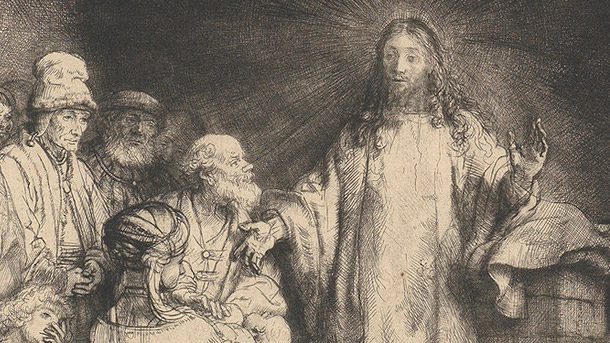
jesus_rembrandt_peace_610x343
Sixth Sunday of Easter – May 5, 2012
The readings for the 6th Sunday of Easter are Acts 15:1-2, 22-29; Revelation 21:10-14, 22-23; John 14:23-29


The early Church community in Jerusalem was not without its problems! Several of the controversies are evident in today’s first reading from Chapter 15 of the Acts of the Apostles.
When some of the converted pharisees of Jerusalem discover the results of the first missionary journey of Paul (vv 1-5), they urge that the Gentiles be taught to follow the Mosaic law. Recognizing the authority of the Jerusalem church, Paul and Barnabas go there to settle the question of whether Gentiles can embrace a form of Christianity that does not include this obligation. The Council of Jerusalem (Acts 15:1-35) marks the official rejection of the rigid view that Gentile converts were obliged to observe the Mosaic law completely. From here to the end of the book of Acts, Paul and the Gentile mission become the focus of Luke’s writing.

Early Church controversies
If the Gentiles are to become Christian, does that imply they must observe the customs of the Jewish converts to Christianity? This would mean imposing circumcision, dietary restrictions, and marriage regulations. The scene from today’s first reading not only presents us with one of the first great controversies of the early Church, but also gives us some excellent insights into our own understanding of tradition and continuity, and the resolution of conflicts in the Church.
In the reading from the Book of Acts, some unauthorized members of the Jerusalem church tried to insist upon circumcision as a necessity for salvation within the church at Antioch. The classical problem of the early Church revolved around the necessity of the Mosaic law for salvation. Jesus certainly kept it perfectly, from his birth, for he was circumcised on the eighth day (Luke 2:21) and he never annulled the force of the Mosaic law. In fact he states quite clearly: “Do not think I have come to abolish the law and the prophets. I have come, not to abolish them, but to fulfill them” (Matthew 5:17). Yet, Peter on the impulse of the Spirit had baptized the household of the Roman centurion Cornelius without requiring circumcision.
The Apostles and elders gathered for deliberation and came to an agreement with the Mother Church at Jerusalem that the Mosaic laws were not to be required, nor the many traditions of the rabbis. The converts, out of courtesy, were asked not to partake of blood, nor of animals improperly slaughtered without draining the blood, nor of strangled animals for the same reason, nor of marriages within certain blood bonds.

Tradition and history
The Council of Jerusalem therefore settled a doctrinal issue about circumcision and the Mosaic law, but did it in a way to preserve peace. This is a very good model for handling questions of tradition, continuity and conflict today. Both the theological issues and the feelings of people are very important. Peter and Paul show a remarkable respect for the manifestation of the Holy Spirit in the lives of ordinary people and situations. Even when the Spirit seemed to shatter the sacred traditions that existed for centuries, Peter and Paul knew that the Holy Spirit was not bound by tradition and history.

Neither Peter nor Paul were afraid of taking their cases and questions to the leaders of the whole Church. Through prayer, fasting, consultation and voting, decisions are made. Underlying all of this is the desire to preserve peace at all costs, without compromising on principles and human rights. After all, Jesus’ farewell gift to the Church is peace, not division and discord. Our judgments and decisions must lead us and all future generations to our final goal, the New Jerusalem established on earth, the reign of justice, joy and peace among us.

Defense attorney
Today’s Gospel reading (John 14:23-29) reminds us that those who encounter Christ and enter into a friendly relationship with him welcome into their hearts Trinitarian Communion itself, in accordance with Jesus’ promise to his disciples: “If a man loves me, he will keep my word, and my Father will love him, and we will come to him and make our home with him” (14:23).
In John 14:16 Jesus says that he will send “another Advocate” to be on our side. John uses the Greek word “parakletos,” which literally means “one called alongside,” and a standard use of the term for one called alongside to help in a legal situation is defense attorney. There is a legal tone to some of what Jesus says about the Advocate, yet the picture is more exactly that of a prosecuting attorney.

Jesus himself is going to be crucified and die; in the eyes of the world he will be judged, found guilty, and convicted. Yet after his death, the “paraclete” will come forward and reverse the sentence by convicting the world and providing Jesus’ innocence (16:8-11).

Jesus was our first Advocate with the Father. The new Advocate is not a kind of a proxy sent to replace the absent Lord: on the contrary, it assures his presence as well as the Father’s. They will “come to” the one who remains faithful to Jesus’ word, and they will dwell “with” him. Not with the others — those who do not love the Lord and do not keep his word.

The paraclete dwells in everyone who loves Jesus and keeps the commandments, and so his presence is not limited by time (14:15-17). That may be the way in which the coming of the paraclete is “better.” These words of Jesus about the paralcete illustrate beautifully how the audience to which he speaks at the Last Supper extends beyond those present at that moment in history. Jesus words are also addressed to us today.

The paraclete is just as present in the modern disciples of Jesus as he was in the first generation. No one should think that Jesus has abandoned his Church in our times. He continues to send us God’s Spirit of Truth. We are told in the Gospel that the “one whom the Father will send will teach us everything, and remind us of all that Jesus has said to us” (v 26). This reminding or calling to memory is beautifully expressed in a new term used in the Catechism of the Catholic Church to describe the work of the paraclete: “The Holy Spirit is the Church’s living memory” (No. 1099). The Holy Spirit will increase our gifts to the extent that we love Jesus and our brothers and sisters, dwell in his Word, obey the commandments, and share what we have received so generously and freely with others.

A model
The Council of Jerusalem left us a model for dealing with difficult situations in the Church. Both the theological issues and the feelings of people were very important for the apostles. Even when the Spirit seemed to shatter the sacred traditions that existed for centuries, Peter and Paul knew that the Holy Spirit was not bound by tradition and history. We could say that this same pastoral strategy or methodology is at work today in some of the liturgical changes we will be experiencing in the English-speaking world.

On April 28, 2010, Benedict XVI met with the International Vox Clara Committee at the Vatican. This group of cardinals, bishops and liturgical experts has worked very hard over the past years to establish and finalize the new translation of the Roman Missal in the English language. Their work has often been misunderstood, criticized and unfairly judged in many circles. I found the Pope’s encouraging words to the Vox Clara Commission to reflect in many ways the pastoral sensitivity and sense of history that reigned at the first Council of Jerusalem.

Let us recall Benedict XVI’s words to this liturgical committee, and in so doing, learn from them as we prepare to “receive” the new translation of the Roman Missal for the English speaking world: “I thank you for the work that Vox Clara has done over the last eight years, assisting and advising the Congregation for Divine Worship and the Discipline of the Sacraments in fulfilling its responsibilities with regard to the English translations of liturgical texts. This has been a truly collegial enterprise.

“St. Augustine spoke beautifully of the relation between John the Baptist, the vox clara that resounded on the banks of the Jordan, and the Word that he spoke. A voice, he said, serves to share with the listener the message that is already in the speaker’s heart. Once the word has been spoken, it is present in the hearts of both, and so the voice, its task having been completed, can fade away (cf. Sermon 293).

“I welcome the news that the English translation of the Roman Missal will soon be ready for publication, so that the texts you have worked so hard to prepare may be proclaimed in the liturgy that is celebrated across the Anglophone world. Through these sacred texts and the actions that accompany them, Christ will be made present and active in the midst of his people. The voice that helped bring these words to birth will have completed its task.

“A new task will then present itself, one which falls outside the direct competence of Vox Clara, but which in one way or another will involve all of you — the task of preparing for the reception of the new translation by clergy and lay faithful. Many will find it hard to adjust to unfamiliar texts after nearly 40 years of continuous use of the previous translation.

“The change will need to be introduced with due sensitivity, and the opportunity for catechesis that it presents will need to be firmly grasped. I pray that in this way any risk of confusion or bewilderment will be averted, and the change will serve instead as a springboard for a renewal and a deepening of Eucharistic devotion all over the English-speaking world.”

Photo credit: CNS photo/courtesy of the Philadelphia Museum of Art by Rembrandt

Thursday, April 18, 2013

4th Sunday of Easter (C)


Voice of the Good Shepherd

April 16, 2013 by  Leave a Comment
inShare  
4th Sunday of Easter, Year C – Sunday April 21, 2013 
The readings for the 4th Sunday of Easter are Acts 13:14, 43-52; Revelation 7:9, 14b-17; John 10:27-30

As we move away from the day of Christ’s resurrection, the Sunday Scripture readings for the Easter Season help to deepen our understanding of what happened to Jesus and to the Church through his triumph over death. On the Second Sunday of Easter, we looked carefully at the wounds of Christ and renewed friendship with him at table in a locked upper room.
The Third Sunday of Easter this year (C) enabled us to peer into the intimate lakeshore scene, leading us through the ruins of denial and despair, and offering us a chance to recommit ourselves to loving Christ as friends.
On this Fourth Sunday of Easter, we encounter the Good Shepherd who is really the beautiful or noble shepherd who knows his flock intimately. “Good Shepherd Sunday” is also the World Day of Prayer for Vocations in the Church. In all three liturgical cycles, the Fourth Sunday of Easter presents a passage from John’s Gospel about the Good Shepherd.
In the Old Testament, God himself is represented as the shepherd of his people. “The Lord is my shepherd, I shall not want” (Psalm 23:1). “He is our God and we are his people whom he shepherds” (Psalm 95:7). The future Messiah is also described with the image of the shepherd: “Like a shepherd he feeds his flock; in his arms he gathers the lambs, carrying them in his bosom, and leading the ewes with care” (Isaiah 40:11).
In the Bible and the ancient Near East, “shepherd” was also a political title that stressed the obligation of kings to provide for their subjects. The title connoted total concern for and dedication to others. Shepherd and host are both images set against the background of the desert, where the protector of the sheep is also the protector of the desert traveler, offering hospitality and safety from enemies. The rod is a defensive weapon against wild animals, while the staff is a supportive instrument; they symbolize concern and loyalty.
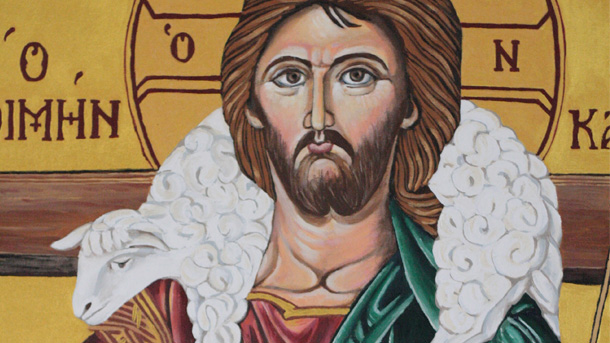
jesus_shepherd_610x343
Ideal image

This ideal image of the shepherd finds its fulfillment in Jesus Christ. He is the “Good Shepherd” who goes in search of the lost sheep; he feels compassion for the people because he sees them “as sheep without a shepherd” (Matthew 9:36); he calls his disciples “the little flock” (Luke 12:32). Peter calls Jesus “the shepherd of our souls” (1 Peter 2:25) and the Letter to the Hebrews speaks of him as “the great shepherd of the sheep” (Hebrews 13:20).
Today’s Gospel passage (John 10:27-30) highlights two important characteristics of Jesus’ role as shepherd. The first has to do with the reciprocal knowledge that the sheep and shepherd have: “My sheep hear my voice and I know them and they follow me.” The sheep remained for many years in the company of the shepherd who knew the character of each one and gave them affectionate names. Thus it is with Jesus and his disciples: He knows his disciples “by name,” intimately. He loves them with a personal love that treats each as if they were the only one who existed for him.
There is also a second aspect of the shepherd’s vocation in today’s Gospel. The shepherd gives his life to his sheep and for his sheep, and no one can take them out of his hand. Wild animals and thieves were a nightmare and constant threat for the shepherds of Israel. Herein lies the difference between the true shepherd who shepherds the family’s flock, and the hired hand who works only for the pay he receives, who does not love, and indeed often hates, the sheep. When the mercenary is confronted with danger, he flees and leaves the sheep at the mercy of the wolf or bandits; the true shepherd courageously faces the danger to save the flock.
The sheep are far more than a responsibility to the Good Shepherd: They are the object of the shepherd’s love and concern. Thus, the shepherd’s devotion to them is completely unselfish; the Good Shepherd is willing to die for the sheep rather than abandon them. To the hired hand, the sheep are merely a commodity, to be watched over only so they can provide wool and mutton.
Gift from God
Today’s Gospel passage presents to us one of the deepest mysteries of the human spirit. Faith, the ability to hear and to follow a call, is a gift to Jesus and a gift to the followers of Jesus. Why are some capable of hearing that leads to faith? Why are some capable of recognizing the Father in the words of Jesus? The only answer presented is that faith is a gift. Our God and his Son are shepherds that care for us and know us and even love us in our stubbornness, deafness and diffidence. Do we really rejoice in hearing the voice of the Good Shepherd?
I cannot help but call to mind the profound teaching on the Good Shepherd that was offered to us by Benedict XVI during the Mass of inauguration of his Petrine Ministry eight years ago, on Sunday, April 24, 2005, at the Vatican. In his very first homily as the Successor of Peter, Benedict XVI said: “One of the basic characteristics of a shepherd must be to love the people entrusted to him, even as he loves Christ Whom he serves. ‘Feed my sheep,’ says Christ to Peter, and now, at this moment, He says it to me as well. Feeding means loving, and loving also means being ready to suffer. Loving means giving the sheep what is truly good, the nourishment of God’s truth, of God’s word, the nourishment of His presence, which He gives us in the Blessed Sacrament.”
External and internal deserts
The Holy Father continued:
“For the Fathers of the Church, the parable of the lost sheep, which the shepherd seeks in the desert, was an image of the mystery of Christ and the Church. The human race — every one of us — is the sheep lost in the desert which no longer knows the way. The Son of God will not let this happen; he cannot abandon humanity in so wretched a condition. He leaps to his feet and abandons the glory of heaven, in order to go in search of the sheep and pursue it, all the way to the Cross. He takes it upon his shoulders and carries our humanity; he carries us all — he is the good shepherd who lays down his life for the sheep. [...]
“The pastor must be inspired by Christ’s holy zeal: For him it is not a matter of indifference that so many people are living in the desert. And there are so many kinds of desert. There is the desert of poverty, the desert of hunger and thirst, the desert of abandonment, of loneliness, of destroyed love. There is the desert of God’s darkness, the emptiness of souls no longer aware of their dignity or the goal of human life. The external deserts in the world are growing, because the internal deserts have become so vast. Therefore the earth’s treasures no longer serve to build God’s garden for all to live in, but they have been made to serve the powers of exploitation and destruction. The Church as a whole and all her pastors, like Christ, must set out to lead people out of the desert, towards the place of life, toward friendship with the Son of God, towards the One who gives us life, and life in abundance.
“One of the basic characteristics of a shepherd must be to love the people entrusted to him, even as he loves Christ whom he serves. ‘Feed my sheep,’ says Christ to Peter, and now, at this moment, he says it to me as well. Feeding means loving, and loving also means being ready to suffer. Loving means giving the sheep what is truly good, the nourishment of God’s truth, of God’s word, the nourishment of his presence, which he gives us in the Blessed Sacrament. My dear friends — at this moment I can only say: pray for me, that I may learn to love the Lord more and more. Pray for me, that I may learn to love his flock more and more — in other words, you, the holy Church, each one of you and all of you together. Pray for me, that I may not flee for fear of the wolves. Let us pray for one another, that the Lord will carry us and that we will learn to carry one another.
“Only when we meet the living God in Christ do we know what life is. We are not some casual and meaningless product of evolution. Each of us is the result of a thought of God. Each of us is willed, each of us is loved, each of us is necessary. There is nothing more beautiful than to be surprised by the Gospel, by the encounter with Christ. There is nothing more beautiful than to know Him and to speak to others of our friendship with Him. The task of the shepherd — the task of the fisher of men — can often seem wearisome. But it is beautiful and wonderful, because it is truly a service to joy, to God’s joy which longs to break into the world.”
Year C of “Words Made Flesh” will be published by the Canadian Conference of Catholic Bishops Publishing Service during the course of the year 2013. Year B can still be purchased through Salt + Light’s online store. Sign up for our email news letter to be notified as soon as Year C is available:

Sunday, March 31, 2013

The Lord is RISEN!


The Lord is, truly, RISEN! Allelulia!

'Let the risen Jesus enter your life, welcome him as a friend, with trust: he is life! If up till now you have kept him at a distance, step forward. He will receive you with open arms. If you have been indifferent, take a risk: you won’t be disappointed. If following him seems difficult, don’t be afraid, trust him, be confident that he is close to you, he is with you and he will give you the peace you are looking for and the strength to live as he would have you do.'

'There is one last little element that I would like to emphasize in the Gospel for this Easter Vigil. The women encounter the newness of God. Jesus has risen, he is alive! But faced with empty tomb and the two men in brilliant clothes, their first reaction is one of fear: “they were terrified and bowed their faced to the ground”, Saint Luke tells us – they didn’t even have courage to look. But when they hear the message of the Resurrection, they accept it in faith. And the two men in dazzling clothes tell them something of crucial importance: “Remember what he told you when he was still in Galilee… And they remembered his words” (Lk 24:6,8). They are asked to remember their encounter with Jesus, to remember his words, his actions, his life; and it is precisely this loving remembrance of their experience with the Master that enables the women to master their fear and to bring the message of the Resurrection to the Apostles and all the others (cf. Lk 24:9). To remember what God has done and continues to do for me, for us, to remember the road we have travelled; this is what opens our hearts to hope for the future. May we learn to remember everything that God has done in our lives.' (Pope Francis - Easter Homily)

Wednesday, March 27, 2013

Short Meditation on the 7 Last Words...


Short Meditation on the Seven Last Words
By Fr. Jun Mercado, OMI
First Meditation: “Father Forgive them for they do not know what they are doing.”
Jesus experienced abandonment in his moments of trials and difficulties.  His own friends abandoned him and fled for safety.  One of his chosen ones betrayed him for 30 pieces of silver. His own people disowned him. And they hailed him to foreign power to be tried and condemned to die. 
In all his pains and sufferings, he lovingly looked at them and even as he heard their jeering, he said: "Father, forgive them for they do not know what they are doing."
When we feel betrayed and abandoned... may we remember Jesus' words... and learn to forgive.  
Second Meditation: “Today, you will be with me in paradise…”
One of the thieves nailed to the cross with Jesus, exclaimed: "Lord, remember me when you enter into your kingdom."  And Jesus replied: "Amen I say to you, today, you will be with me in paradise."
We are all sinners... Paradise is NOT a reward of our hard work or strivings.  No, we do NOT merit the kingdom of God! 
Paradise is NOT earned...! It is a GIFT!  We pray for that gift... and like the thief on his side, we cry to God: "Lord, remember me..." 
Yes, God remembers us always... and God remembers us with loving compassion.
Likewise, we are invited to remember God always... May God's name and compassion be always in our lips and hearts.
 Third Meditation:  To his mother, Jesus said: “woman, here is your son”.  And to his disciple: “here is your mother.”
In his agony, Jesus saw the pain of his mother… he looked at her with love and entrusted her to his disciple:  “woman, here is your son”.  And to his disciple standing by the cross, Jesus said: “here is your mother.” 
Tradition has it that Jesus, on his way to Golgotha where he would be crucified, met his mother.  There are three important scenes depicted in the traditional Stations of the Cross. The first was the meeting of mother and son on the way to Calvary.  Second was the scene where Mary, the women and his beloved disciple were standing at the foot of the cross. And third was the scene when Jesus was taken from the cross and laid on his mother’s lap.  This last scene had inspired great artists and the most prominent was the great Michelangelo that gave us the famous Pieta.
 Yes, Mary was always there in the life and work of her son… In this meditation Jesus is speaking to us and gives us his mother… to be our mother, too!   He speaks to her mother and tells her… that we, now, are her sons and daughters!  And today, Mary – our mother is always there, too, in our life…
Fourth Meditation:  “I am thirsty.”
Nailed on the cross, Jesus felt thirst… and he cried out: “I am thirsty.”  This cry of anguish echoes the cry of the poor.   In many places in the world – in urban and rural settings, we find the poor who cry out, as well, in their loud voice: “I am thirsty.”  Often this is a cry of the real physical thirst – no drinking water, no washing water, no toilet facilities.  At times, this is a cry of anguish, because they find “no exit” from the “hole” of poverty that is akin to a quicksand that drowns them.  At other times, this is a cry that seeks solidarity from people – looking for a helping hand… an extra shirt or a walk of an extra mile. 
Jesus in his thirst expresses his solidarity with us… it is the thirst that invites us, also, to be in solidarity with our neighbor… But who is our neighbor?  Is this not the very question that the doctor of the law asked Jesus in the parable of the Good Samaritan? 
Fifth Meditation:  “Eloi, Eloi, Lama Sabbactani” My God, My God, Why have you forsaken me.”
Towards the end, Jesus experienced a near despair! He was abandoned; He was in extreme pain; and He could not understand the tragedy that was unfolding… He cried out to his father: “My God, my God, why have you forsaken me…” 
This cry reminds of the song, Foot Prints in the Sand.  It was the same experience of being abandoned in times of great pain and difficulty… Speaking to Lord, the person asked: “Lord, why have you abandoned me… for I see only a set of foot prints?”  The Lord answered, “no my child, when you see only a set of foot prints… those where the times that I carried you in my arm…”
 God is there… God carries us in his arms… when we, too, see only a set of foot prints… they are God’s and not ours…!
Sixth Meditation: “Father, into your hand, I commend my spirit…”
The end has come and Jesus, totally trusting his Father, cried out: “Father, into your hand, I commend my spirit.” 
There are things we do not understand… The tragedy and grandeur of life, often, escape us.  In fact, to understand life… we need to bend our knees… and like Jesus in the cross, we, too, need to completely put our trust in God. 
When everything is said and done… it is only God’s mercy and love that endure… Yes, we need to make that leap of faith… “Father, into thy hand, I commend my whole life!” 
Seventh Meditation:  “It is finished.”
Before breathing his last, Jesus said: “it is finished.”  Yes, he completed his mission to the last…!  He paid the full price for our freedom to become God’s sons and daughters.  He was the “ransom” for our freedom!
 Romans 8: 31- 39, beautifully, expresses that new dignity purchased by the blood of Jesus Christ: 
 “What then shall we say to this? If God is for us, who is against us? He who did not spare his own Son but gave him up for us all, will he not also give us all things with him? Who shall bring any charge against God's elect? It is God who justifies; who is to condemn? Is it Christ Jesus, who died, yes, who was raised from the dead, who is at the right hand of God, who indeed intercedes for us? Who shall separate us from the love of Christ? Shall tribulation, or distress, or persecution, or famine, or nakedness, or peril, or sword?
 As it is written, “for thy sake we are being killed all the day long; we are regarded as sheep to be slaughtered." No, in all these things we are more than conquerors through him who loved us. For I am sure that neither death, nor life, nor angels, nor principalities, nor things present, nor things to come, nor powers, nor height, nor depth, nor anything else in all creation, will be able to separate us from the love of God in Christ Jesus our Lord.